


Natural Pendant Lights: Rattan, Paper or Recycled Cardboard?
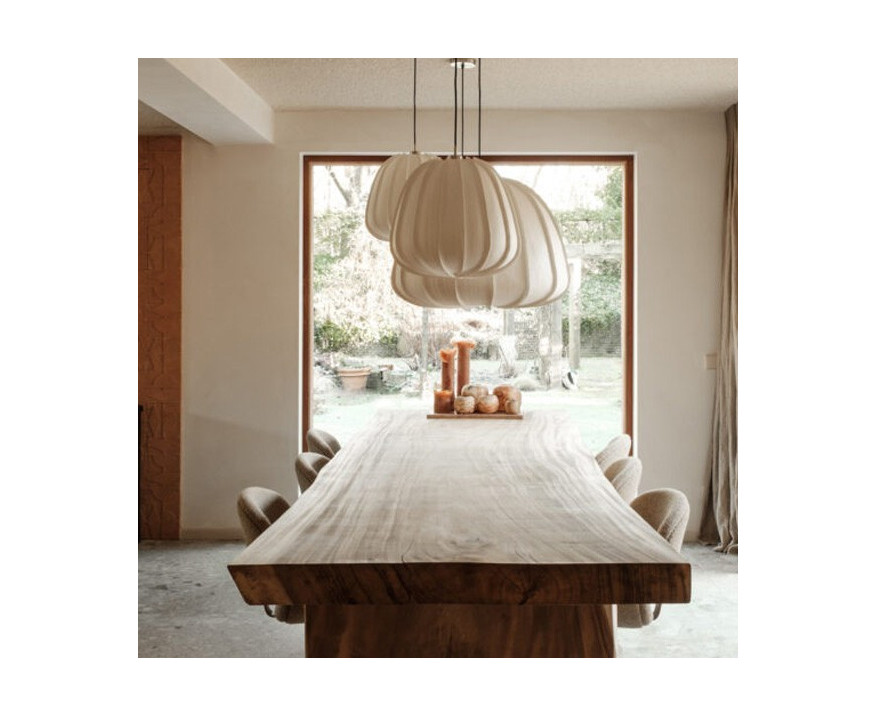
In short: rattan gives an open, patterned light with shadows and suits a bohemian style. Paper gives a soft, even light, very Japandi. Recycled cardboard offers sculptural shapes and an eco-friendly story. All three are cleaned dry, with a feather duster or a soft brush.
Pendant lights in natural materials are very popular: they bring warmth, texture and a softer light than glass or metal. But rattan, paper and recycled cardboard give very different results. Light, style, suitable rooms, care, budget: here is everything you need to choose the right material for your home.
| Material | Light | Style | Care | Example |
|---|---|---|---|---|
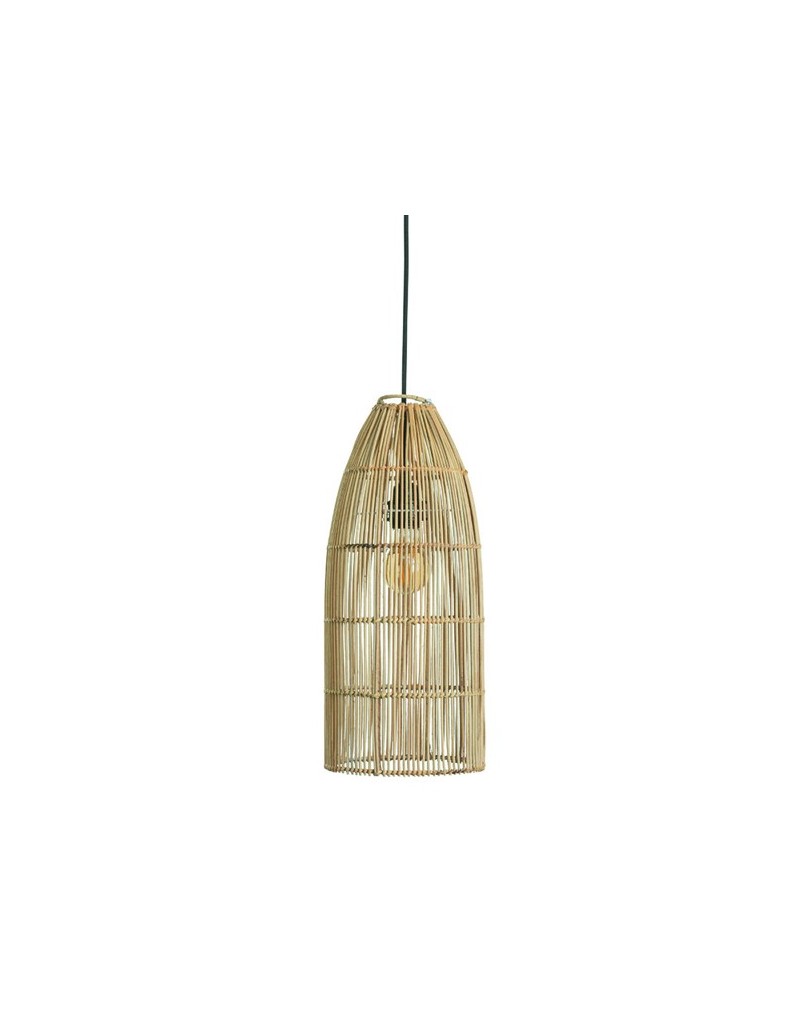
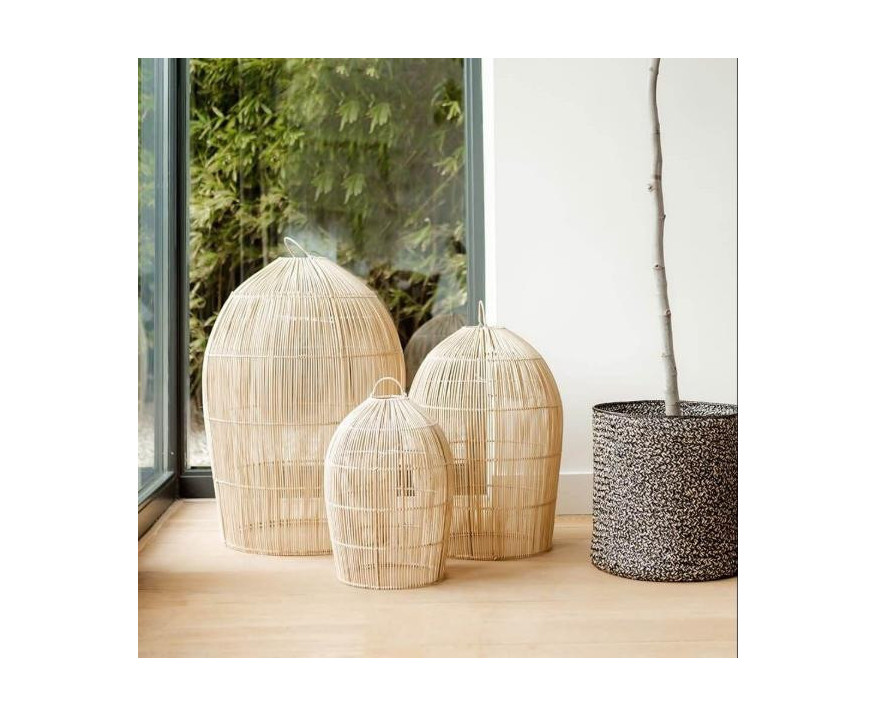
| Rattan | Open, shadows on the walls | Bohemian, Scandinavian, Japandi | Feather duster or soft brush, avoid humidity | Bawang, from €59 with the Fei 01 |
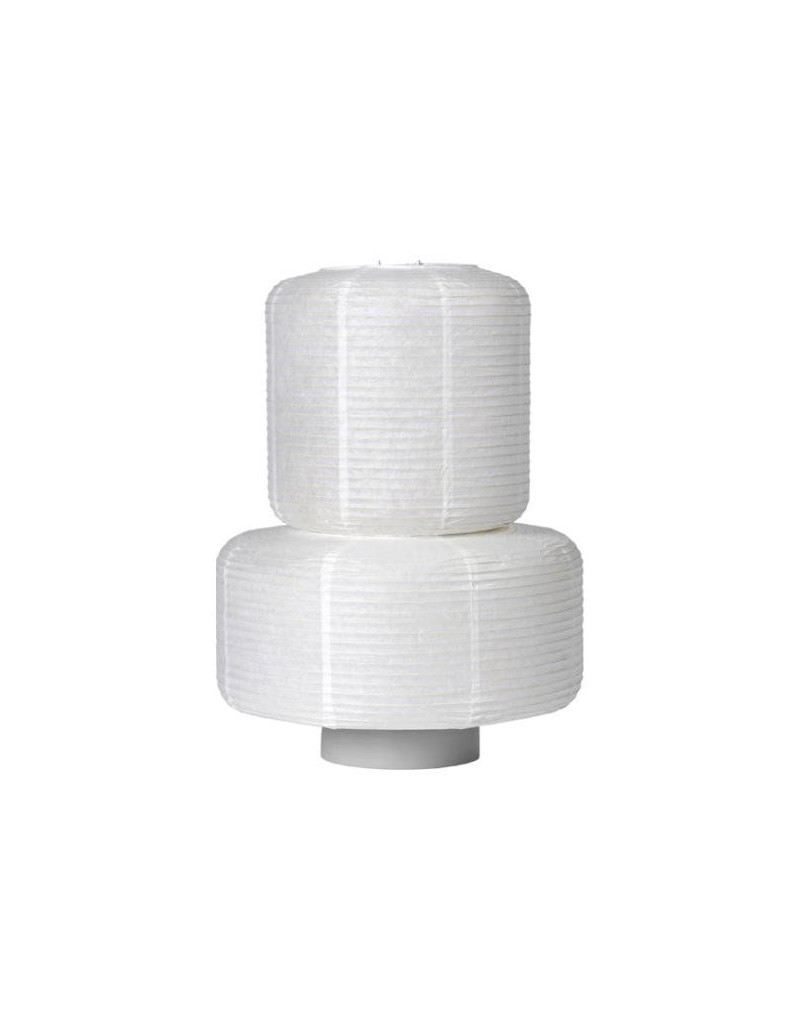
| Handmade paper | Soft and diffused | Japandi, minimalist | Dry feather duster or soft brush, never water or cleaning products | Hozuki L, €918 |
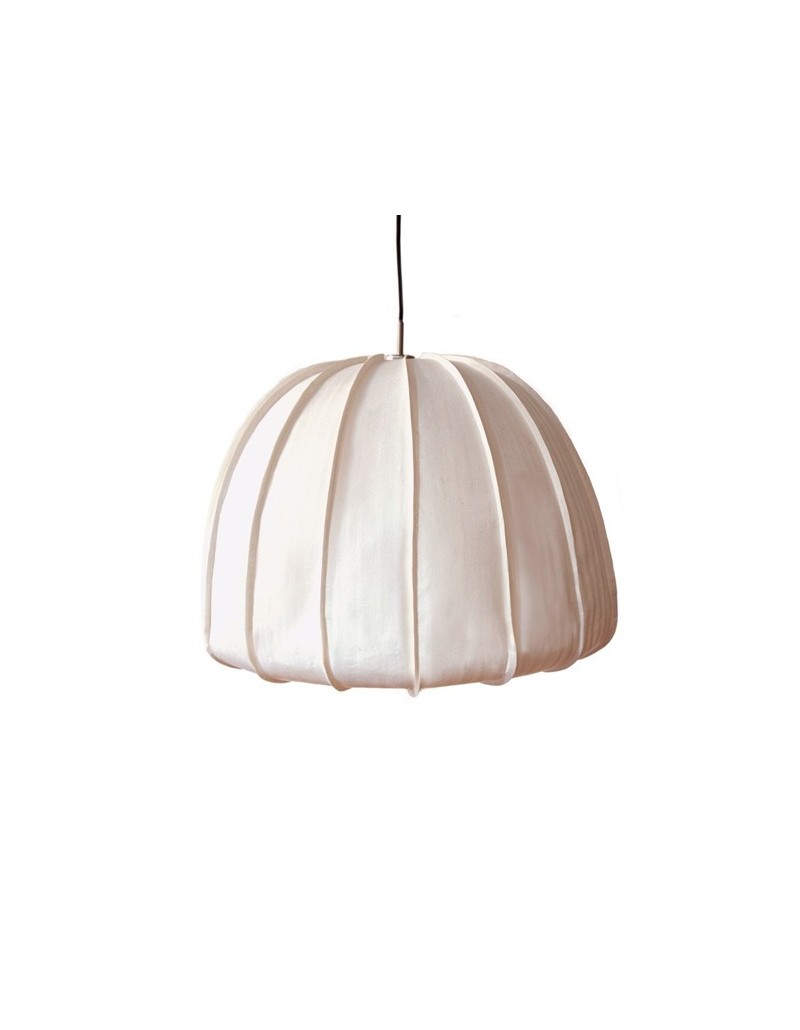
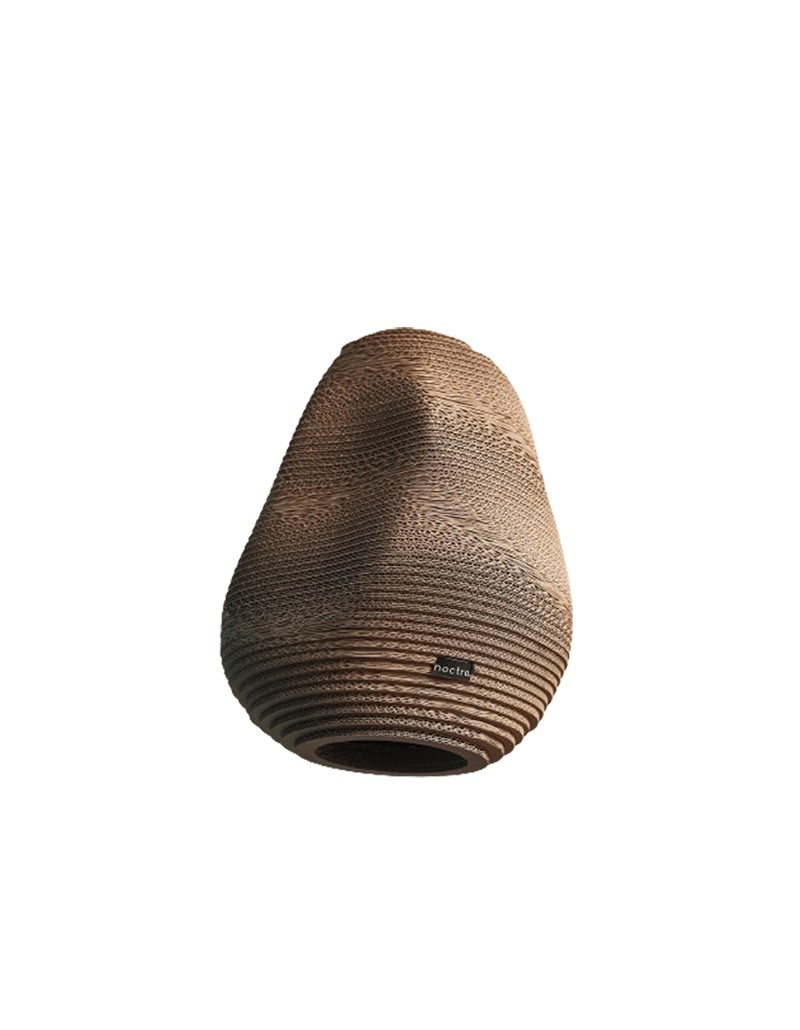
| Recycled cardboard | Warm | Contemporary, organic | Dry feather duster or soft brush, never water or cleaning products | Pebble terracotta S, €313 |
Rattan: the light that draws shadows
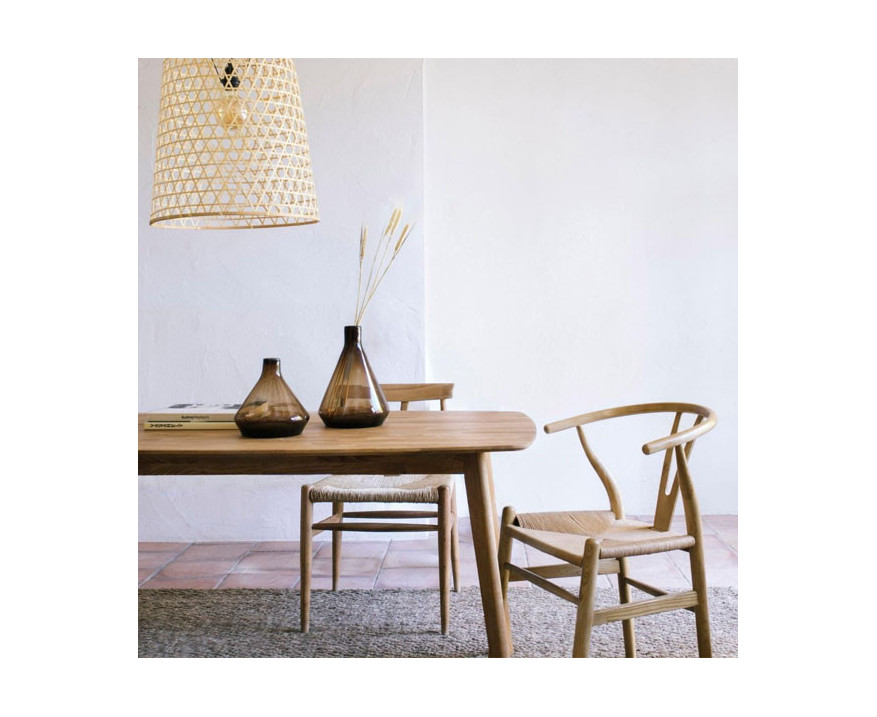
A plant fibre that is both strong and flexible, rattan grows in the tropical forests of Southeast Asia. It is woven by hand, which makes each piece slightly unique. Its great strength is the light: through the weave, it casts patterns on the walls and ceiling, especially in the evening. It is the most affordable material and the one with the widest range of shapes, from the small Fei 01 at €59 to large sets of 3 like the Bawang.
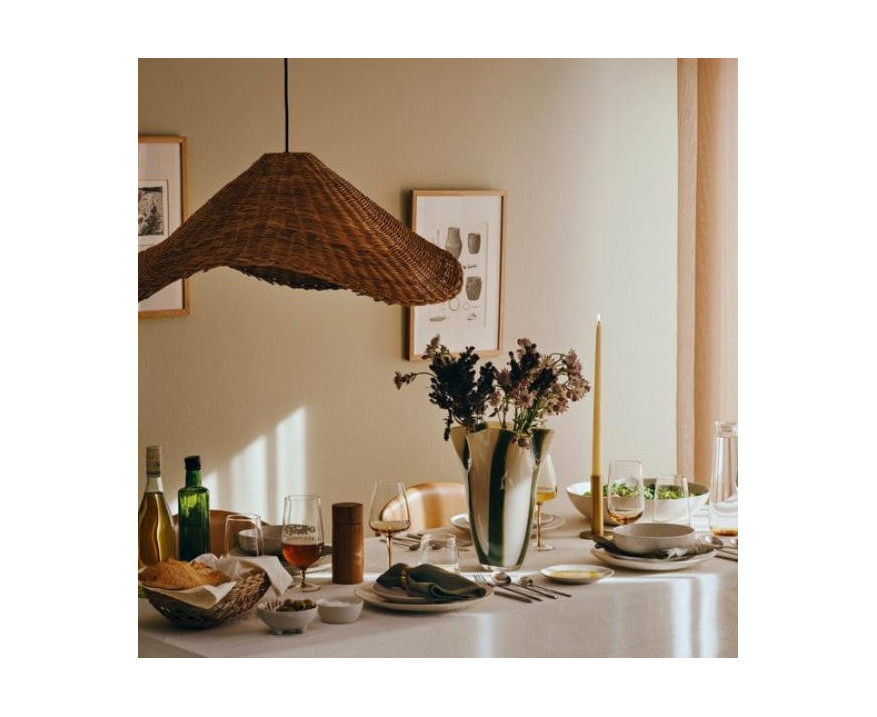
Rattan suits the dining room, living room, bedroom and even the kitchen, above a table or an island. Its only limit: high humidity, which can warp the fibres. To choose the right one above a table, read our guide Choosing a rattan pendant light for your dining room.
Paper: a soft, soothing light
Handmade paper or rice paper turns a pendant into a light sculpture. The light passes through the material instead of filtering through openings: it is diffused and even, without strong shadows. It is the ideal light for rooms where you want calm: bedroom, living room, reading corner. The Hozuki L by Ay Illuminate in handmade paper is a beautiful example. For a smaller budget, the William rice paper shade by Broste Copenhagen keeps the same lantern spirit.
Paper is more fragile than rattan: hang it away from knocks and humidity. Choose an LED bulb, which stays cool.
Recycled cardboard: the sculptural shape
Recycled cardboard allows soft, full shapes that cannot be achieved with a woven fibre. The Pebble pendants by Ay Illuminate, made of recycled cardboard, come in several sizes and colours, from terracotta to black. Noctra pendants such as the Apinae play with layered cardboard strips reminiscent of a beehive. The light is warm and subdued, very pleasant above a table.
It is also the most committed choice: the material has a second life, and the result is still very design-led. Like paper, cardboard does not like water and is cleaned dry only.
Which material for which room?
- Dining room: rattan for a convivial atmosphere, recycled cardboard for a sculptural effect above the table.
- Living room: paper for soft ambient light, rattan for a bohemian style.
- Bedroom: paper, for its soothing light.
- Open kitchen: rattan above an island, away from the hob.
- Hallway or stairwell: a rattan cluster, or a large cardboard pebble.
Pairing these materials with your decor
All three materials pair naturally with wood, linen, ceramics and plants. Rattan goes well with light wood and raw textiles. Paper loves pared-back interiors and white and sand tones. Recycled cardboard stands out against a plain, coloured or dark wall. You can also mix materials in the same room, for example a cardboard pendant above the table and a paper shade in the living area.
FAQ
- Which material gives the most light? Very open rattan lets the most light through. Paper and cardboard give a softer light.
- Are paper and cardboard safe with a bulb? Yes, with an LED bulb that stays cool, respecting the wattage shown on the product page.
- Which material is the most eco-friendly? Recycled cardboard, made from a second-life material. Rattan is also a renewable plant fibre.
- Can they be used in a bathroom? No, humidity damages all three materials.













Leave a Reply Cancel Reply