


Pendant Clusters: How to Hang a Set of 3 Lampshades
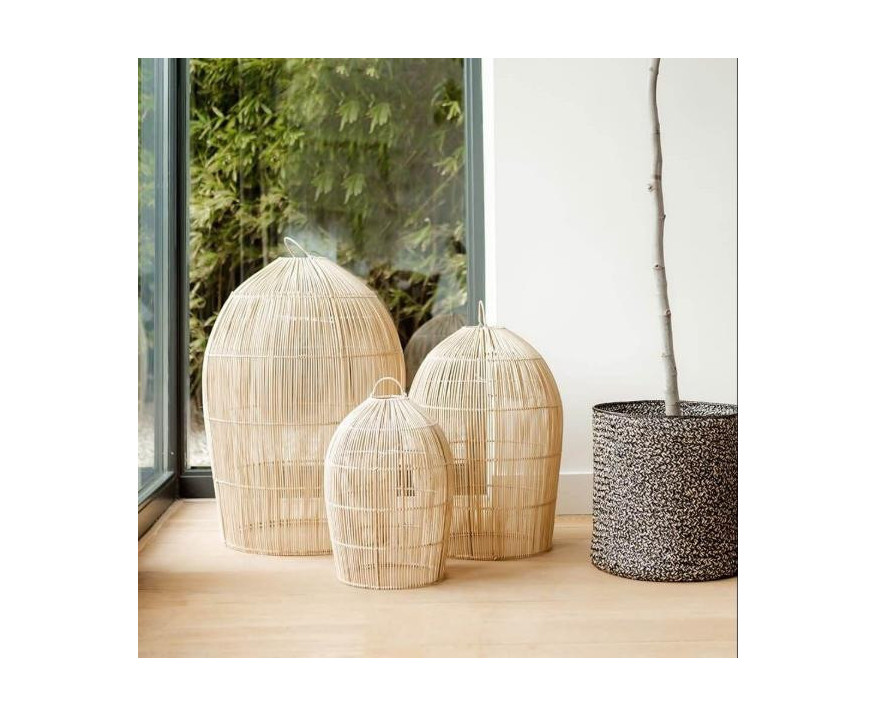
In short: hang the three shades at different heights, 15 to 25 cm apart between each level, grouped on one point or on a multi-pendant ceiling canopy. The largest usually hangs lowest, and the bottom of the cluster stays 70 to 80 cm above a table.
A pendant cluster is several shades hung together at different heights. The effect is livelier and more decorative than a single pendant, especially with natural materials such as rattan. Sets of 3 shades in different sizes are made for this: the proportions are already designed to go together. Here is how to arrange and hang them well.
Where should I hang a cluster?
- Above a round dining table: the cluster replaces one large pendant and brings the centre of the table to life.
- Above a kitchen island: it defines the dining area in an open-plan room.
- In a stairwell: the ideal place to play with large differences in height.
- In a living room corner under a high ceiling: next to a sofa or armchair, it replaces a floor lamp.
- In a bedroom: a small cluster on each side of the bed replaces bedside lamps and frees up the tables.
Three ways to arrange a cluster
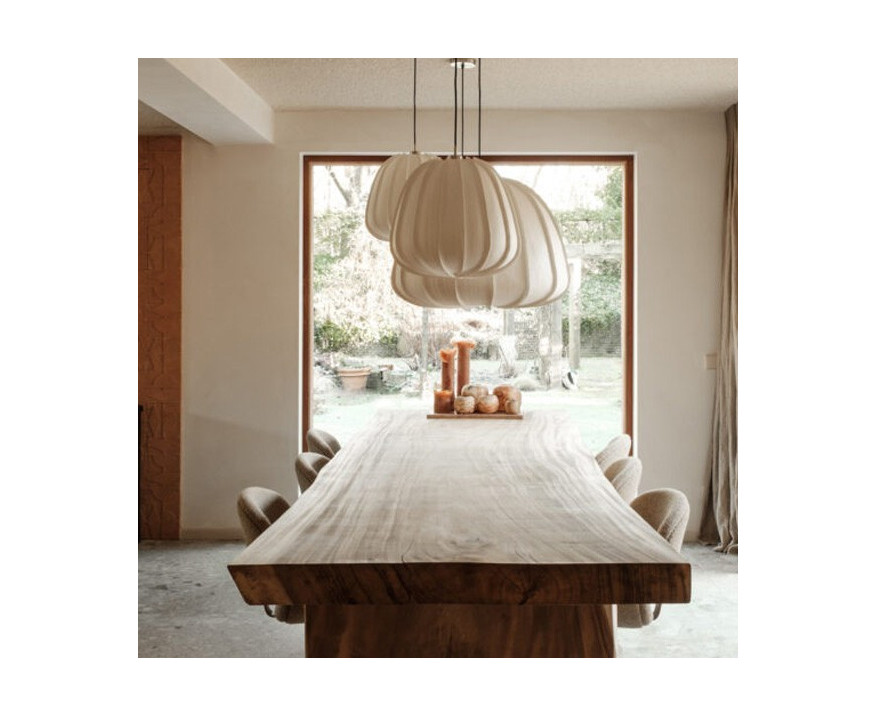
- Cascade: the three shades are grouped on one point, from the largest at the bottom to the smallest at the top. The most natural arrangement, perfect above a round table.
- In a row: the three shades are lined up above a rectangular table or an island, at slightly different heights. The look is more structured.
- Triangle: three ceiling points form a triangle. This arrangement takes up more space and suits large rooms.
How do I set the heights?
Start with the largest shade, at the lowest point. Place the medium one 15 to 25 cm higher, then the small one above it. Irregular gaps look more natural than perfect steps. Above a table, keep the bottom of the lowest shade 70 to 80 cm above the tabletop. In a stairwell or under a ceiling higher than 3 m, you can lengthen the cables and increase the gaps to 40 or 50 cm.
Mixing shapes and colours
A set of 3 identical shades is the simplest solution. For a more personal look, you can combine two models in the same material, for example a bell shape and a rounder one. Mixing natural and black rattan also creates a lovely contrast. The rule to keep in mind: no more than two shapes and two colours in one cluster, so the whole stays harmonious.
What equipment do I need?
Three pendant cables with sockets, three bulbs, and either three ceiling points or a multi-pendant canopy that gathers the three cables on one point. The multi-pendant canopy is the simplest solution when there is only one ceiling point. Choose warm white LED bulbs, around 2,700 K, of the same power for an even light. Call an electrician if in doubt.
Our ready-to-hang sets
| Set | Sizes (ø x h) | Price |
|---|---|---|
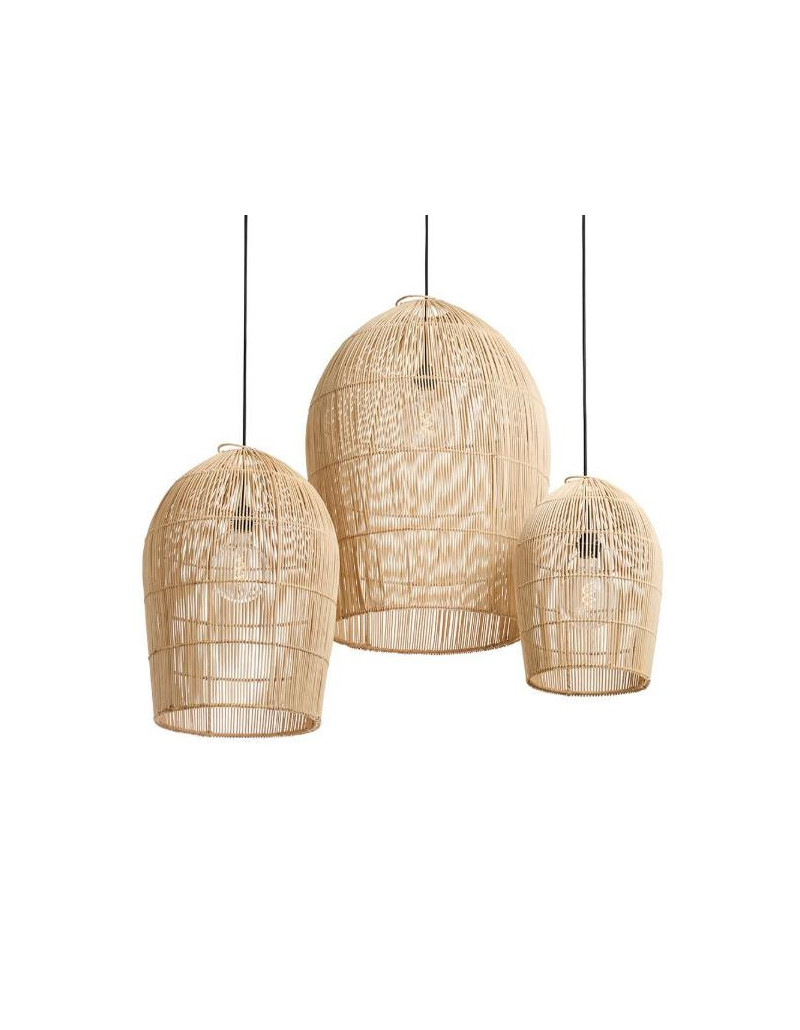
| Bawang | 40 x 45, 50 x 55, 60 x 65 cm | €398 |
| Ikal | 48 x 31, 54 x 35, 60 x 40 cm | €429 |
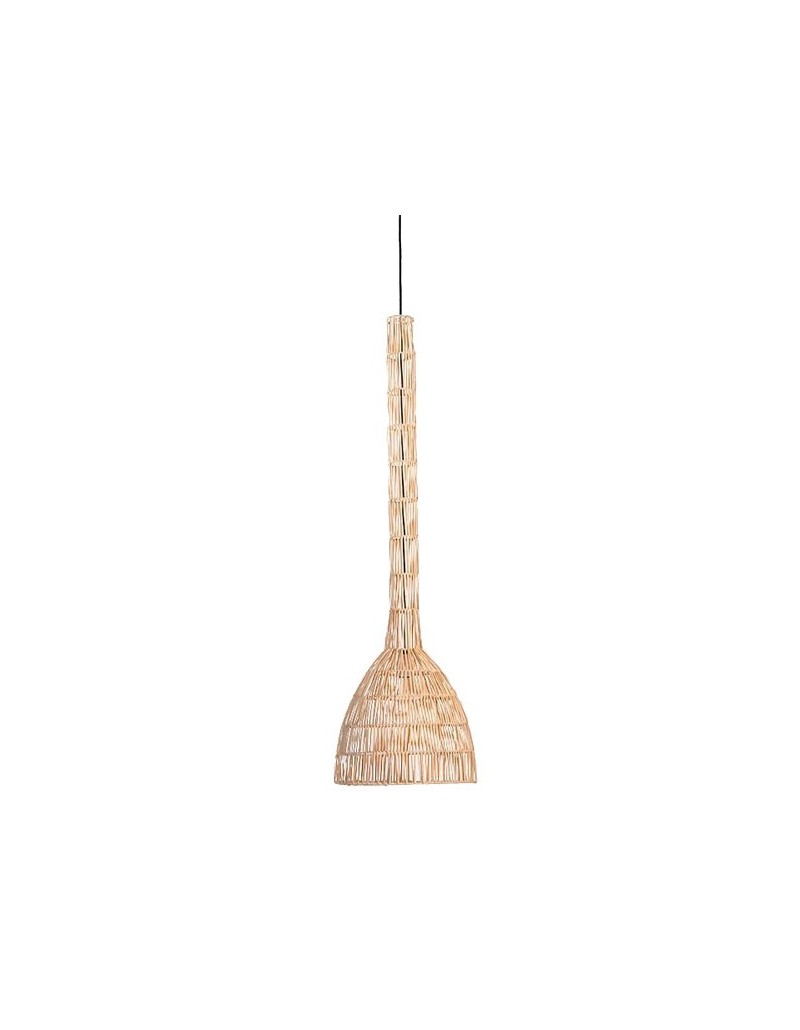
| Lentera | 30 x 43, 40 x 56, 54 x 75 cm | €438 |
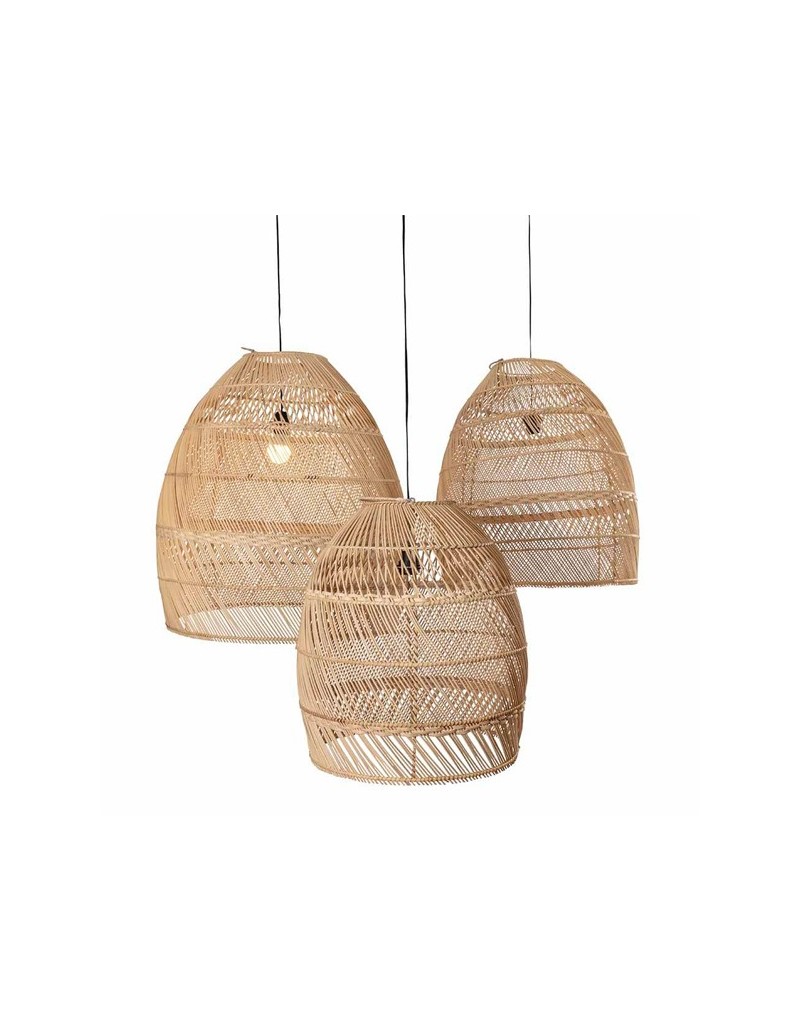
| Moon | 40.5 x 51, 50 x 60, 60 x 70 cm | €499 |
The Bawang has a teardrop shape, ideal as a cascade. The flatter Ikal works well above a table or an island. The tall, slender Lentera comes into its own in a stairwell. The dome-shaped Moon is the most generous of the four. To pick the right size above a table, read our guide Choosing a rattan pendant light for your dining room.
FAQ
- Do I need three ceiling points? No, a multi-pendant canopy lets you connect the three cables to a single ceiling point.
- How far apart should the shades be? Leave a few centimetres between them so they do not touch, and 15 to 25 cm difference in height.
- Can I make a cluster with a low ceiling? Yes, by reducing the height differences and choosing flat shapes like the Ikal.
- Are the shades sold with the electrics? Most rattan shades are sold without cable or bulb: check the product page.


















Leave a Reply Cancel Reply