


Choosing a Rattan Pendant Light for Your Dining Room: Size, Height, Models
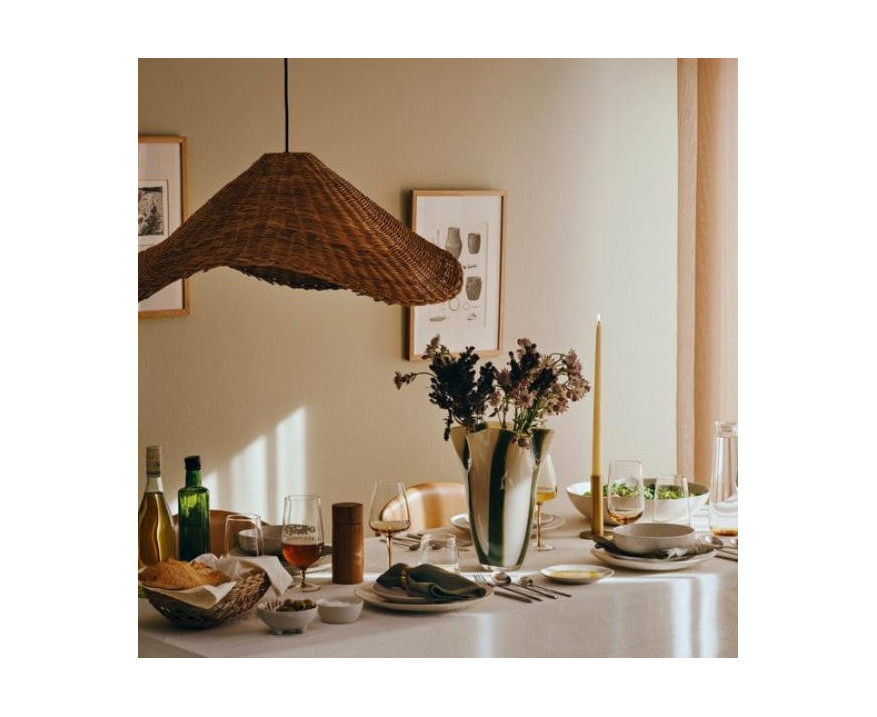
In short: choose a diameter of about half the width of your table, hang the bottom of the shade 70 to 80 cm above the tabletop, and plan several pendants for a table longer than 1.80 m. A warm white LED bulb brings out the rattan weave.
The rattan pendant has become one of the favourite lights for the dining room. It brings a natural material, a warm light and a play of shadows that few lights can match. But a pendant of the wrong size or hung too high can spoil the effect. Here are our simple guidelines for choosing and hanging it well.
Which size should I choose?
The most widely used rule in interior design is simple: the diameter of the pendant is about half the width of the table. A table 90 cm wide therefore calls for a shade of about 45 cm.
| Table | Recommended diameter | Number of pendants |
|---|---|---|
| Round or square, 90 to 120 cm | 40 to 60 cm | 1 |
| Rectangular, 140 to 180 cm | 35 to 50 cm | 2 |
| Rectangular, over 180 cm | 30 to 45 cm | 3, or a cluster |
| Large dining table | 60 to 75 cm | 1 large shade, or 2 |
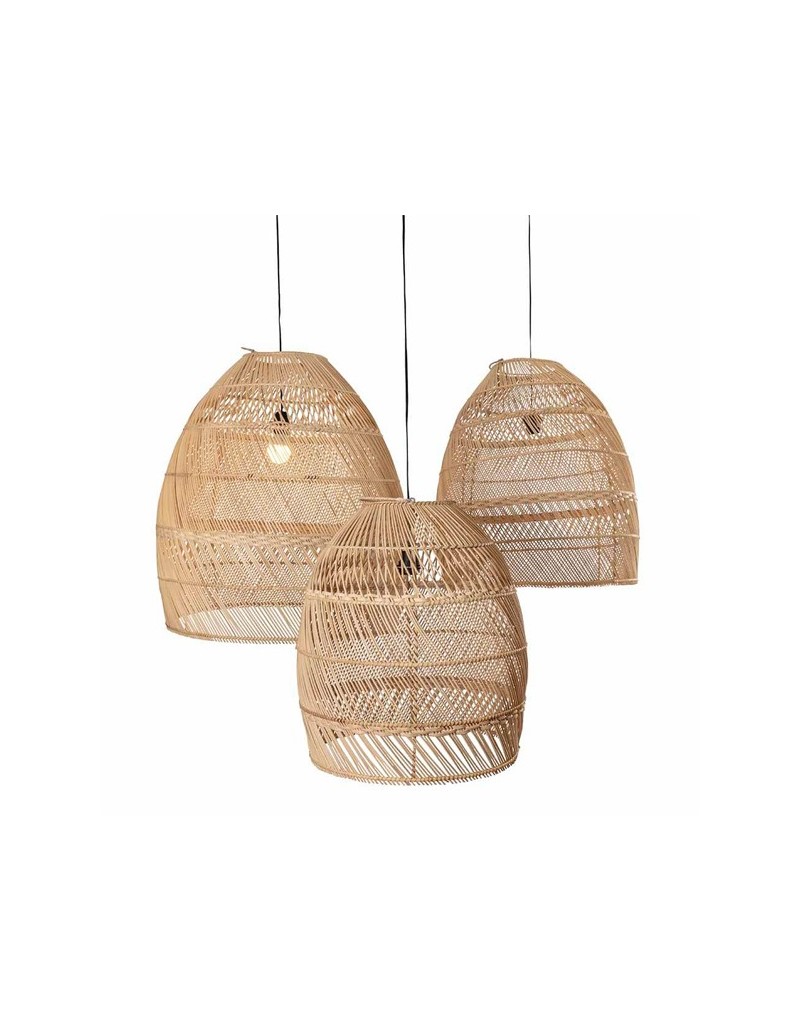
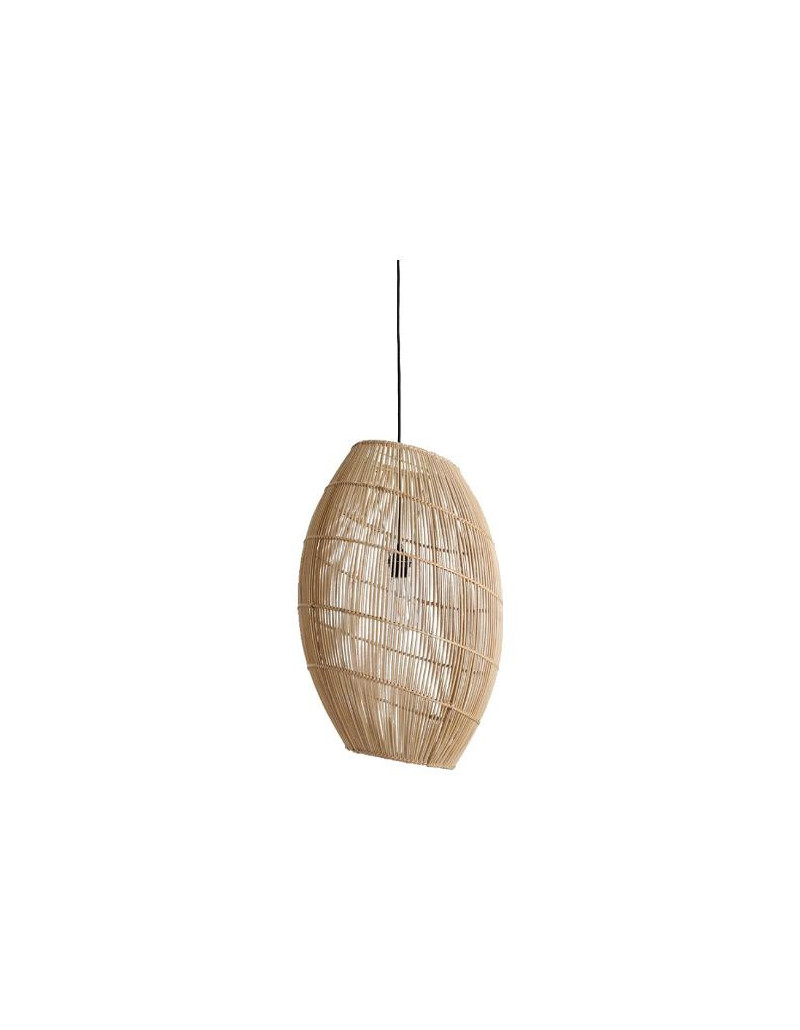
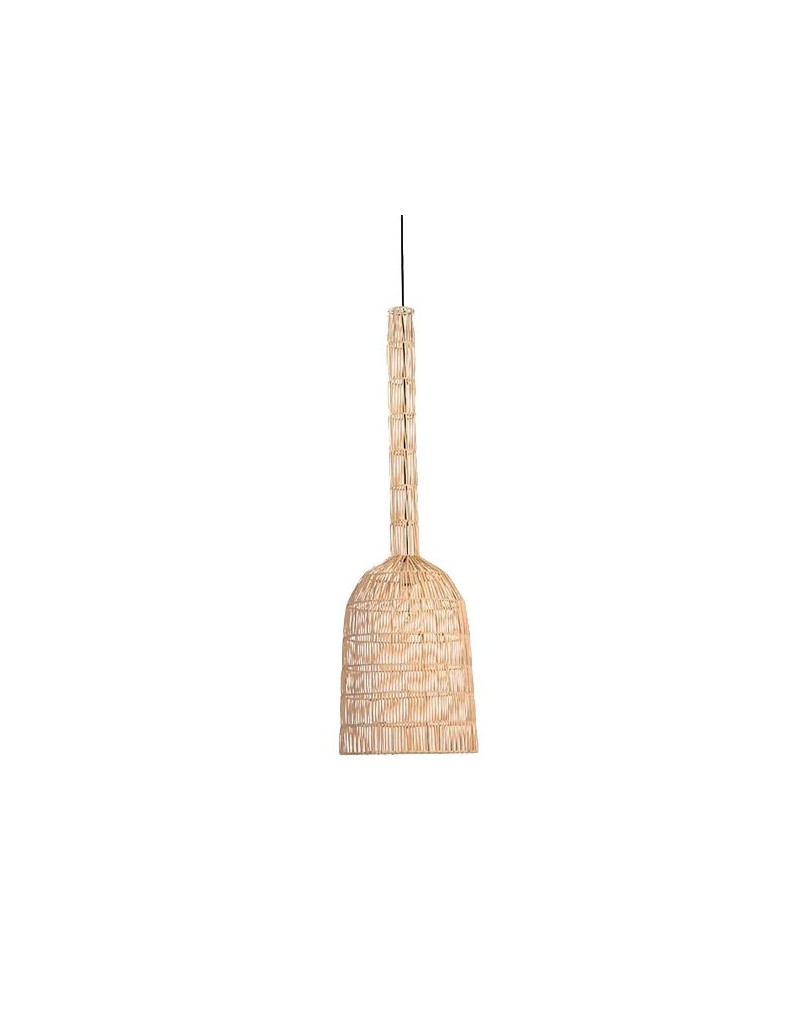
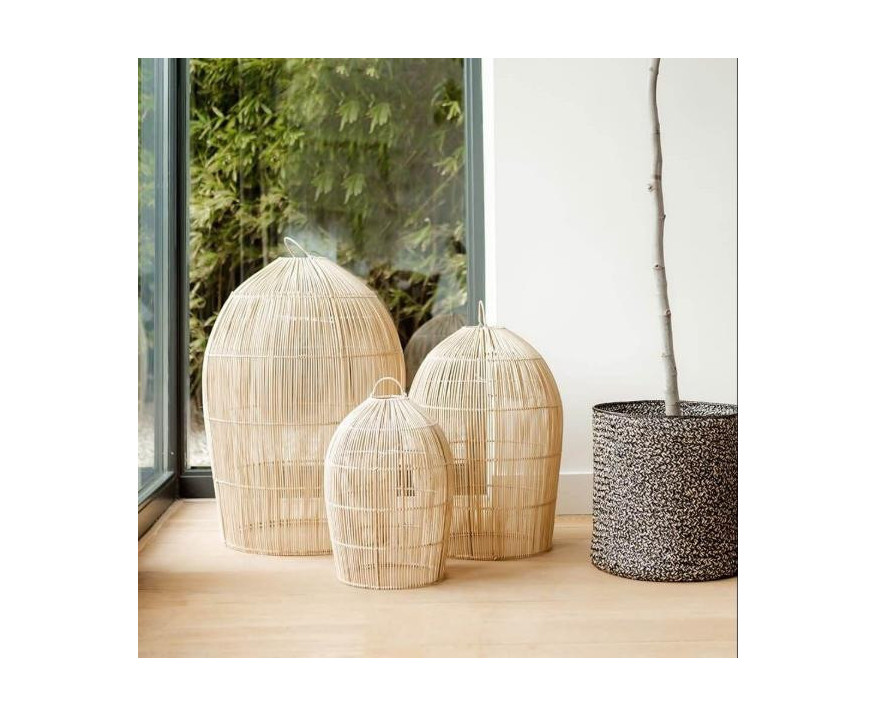
For a round or square table of 90 to 120 cm, the Moon in size L (60 cm) or the Ikal L (60 cm) fill the space without overwhelming it. For a more graphic look above a large table, a wide, flat shade like the Nori (Ø 74 cm) makes a strong statement on its own.
How high should I hang it?
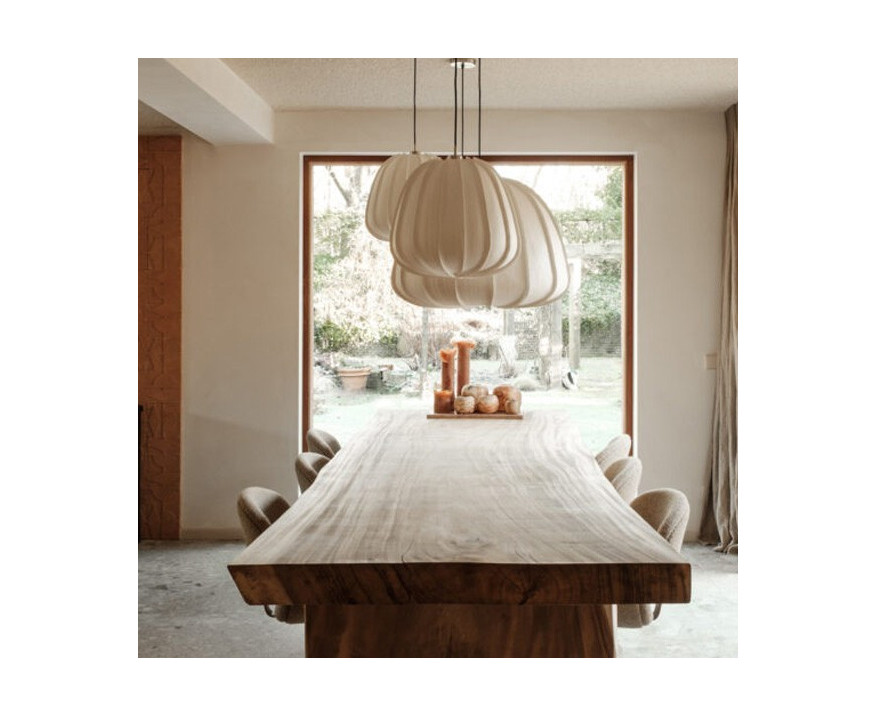
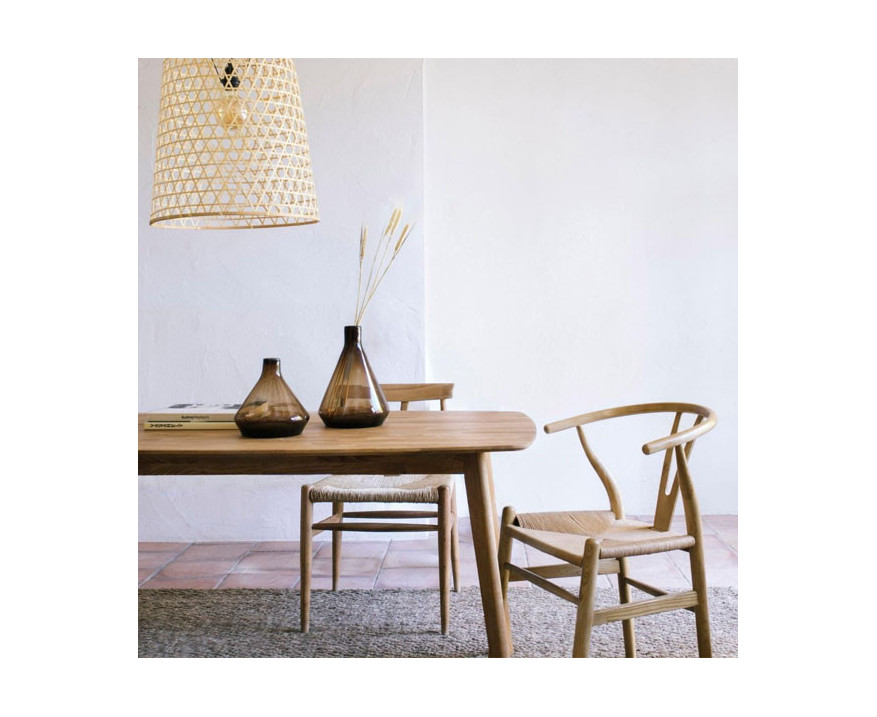
The bottom of the shade usually sits 70 to 80 cm above the tabletop. Low enough to light the table, high enough to see the people opposite. Under a ceiling higher than 2.70 m, you can go a little lower and play with a cluster of shades at different heights. A practical tip: before cutting the cable, ask someone to hold the shade while you sit at the table. It is the best way to check that it does not block the view.
One pendant or several?
A single large pendant creates a strong focal point, ideal above a round table. Several shades at staggered heights give a more bohemian effect: that is the idea behind sets of 3 such as the Bawang or the Lentera. Above a long rectangular table, two or three identical pendants in a row give a more structured look. Allow 60 to 80 cm between each pendant.
Which rattan for which style?
- Scandinavian: light natural rattan and simple bell or dome shapes, with blond wood and linen.
- Bohemian: generous shapes, open weaves and several shades mixed together, with plants and textiles.
- Japandi: low, flat lines, brown or natural tones, few objects around.
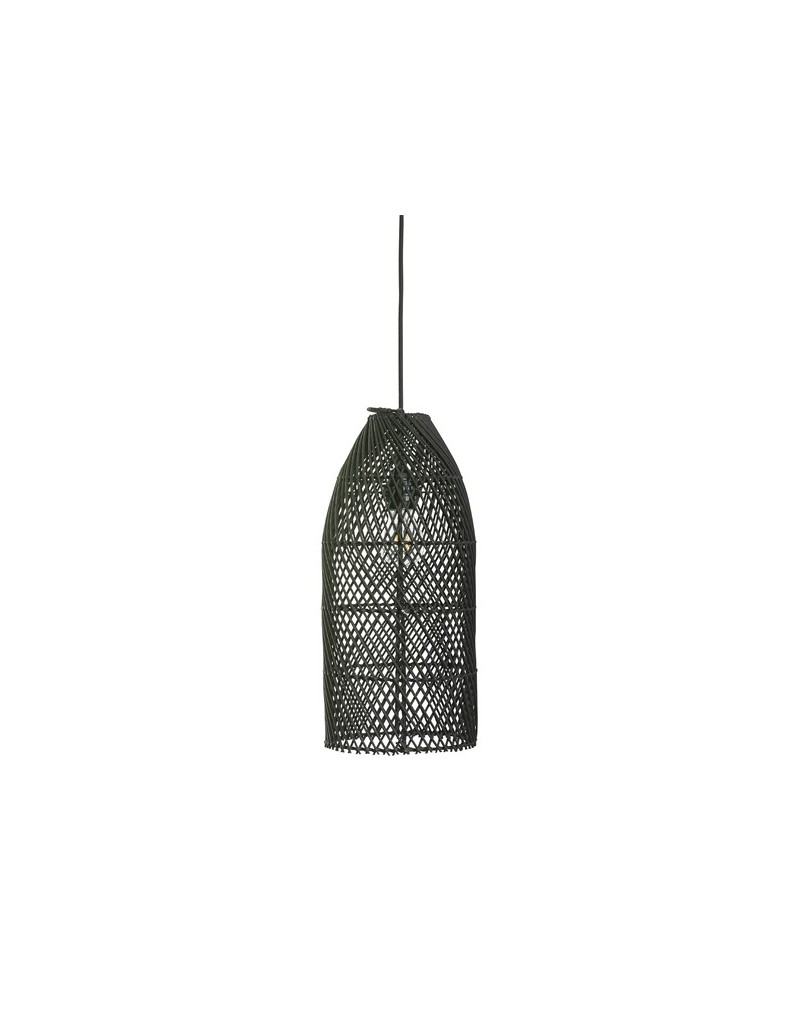
- Contemporary: black rattan, like the Fei 02, which adds contrast against a light wall and metal.
Which bulb?
A warm white LED bulb, around 2,700 K, brings out the rattan and casts lovely shadows in the evening. Avoid cool white, which makes the material look grey and the room less welcoming. A bulb with a visible filament looks great in very open shades. Most rattan shades are sold without cable or bulb: remember to add a pendant cable with a socket.
Mistakes to avoid
- A pendant that is too small and looks lost above a large table.
- A pendant hung too high, which lights the ceiling rather than the table.
- A shade centred on the room instead of on the table.
- A bulb that is too bright or too cold, which flattens the play of shadows.
Caring for rattan
Rattan is easy to care for: a quick pass with a feather duster or soft brush once a month removes the dust. Avoid high humidity and water, which can warp the fibres. To go further on creating a warm atmosphere, read our article Cosy lighting.
FAQ
- Is rattan suitable for an open kitchen? Yes, above a table or an island, as long as you avoid the area right above the hob and high humidity.
- Natural or black rattan? Natural warms up a light interior. Black adds contrast to a more modern decor.
- Can I hang a rattan pendant in a room with a low ceiling? Yes, choose a wide, flat shape rather than a tall one to keep headroom under the shade.
- How long does a rattan shade last? Several years if it is kept dry and dusted regularly.
- Do I need an electrician? Not to replace an existing light on a ceiling point. Yes to create a new ceiling point.



















Leave a Reply Cancel Reply